The Best Cleaning Solution for the ESG Era: Ultrasonic + Microbubble
- The non-contact nature of ultrasonic technology is particularly suited for components with complex structure
- Our microbubble technology has been tested by leading semiconductor manufacturers for cleaning wafer cassettes and PFA tubing, with outstanding results
- As ESG awareness rises globally, ultrasonic combined with microbubble cleaning can reduce the use of chemical solutions and minimize water waste
Fully customizable across the entire process flow to match customer product geometry and process requirements !
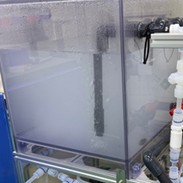
Large contaminants are first removed using multi-frequency ultrasonic waves, followed by more refined cleaning with microbubbles smaller than a pore, effectively reducing the risk of residual impurities.
A DI water rinse tank then provides a final cleaning pass, meeting the most rigorous cleanliness standards. The process concludes with a drying module that can be configured with heated nitrogen, infrared irradiation, or other particle-free drying methods depending on product characteristics, ensuring no watermarks or contamination after processing and achieving optimal cleaning quality.
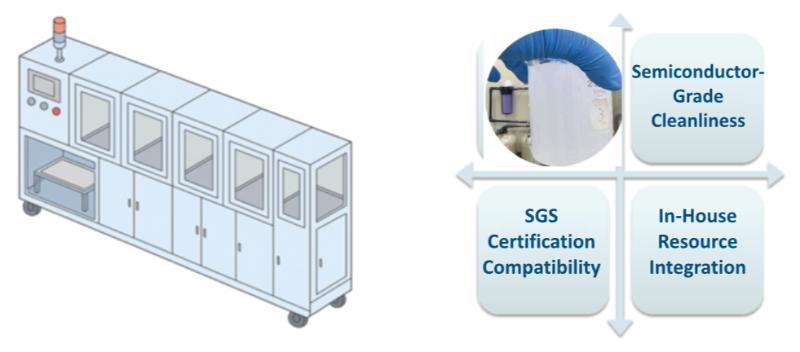
Japan is widely recognized as the global leader in mic robubble cleaning technology. With over 40 years of experience collaborating with Japanese companies, Lim Chemical Co., Ltd. has worked with industry partners to develop microbubble cleaning technology tailored for high-specification applications such as semiconductor manufacturing!
Our solution is capable of generating high-density microbubble water that exceeds industry standards. Combined with our proprietary technology and customized to specific requirements, it achieves both superior cleaning performance and a compact, refined design.
- The reference design is currently estimated to be compact enough to fit within a 20-inch travel suitcase.
- The typical microbubble output concentration in the industry is around 1,000–2,000 pcs/ml, but Lim Chemical's equipment produces microbubbles at twice that concentration !
Through its proprietary technology, Lim Chemical is capable of producing nanoscale bubbles even smaller than microbubbles. In addition to handling finer particles, these bubbles also offer the dual benefits of oil removal and sterilization.
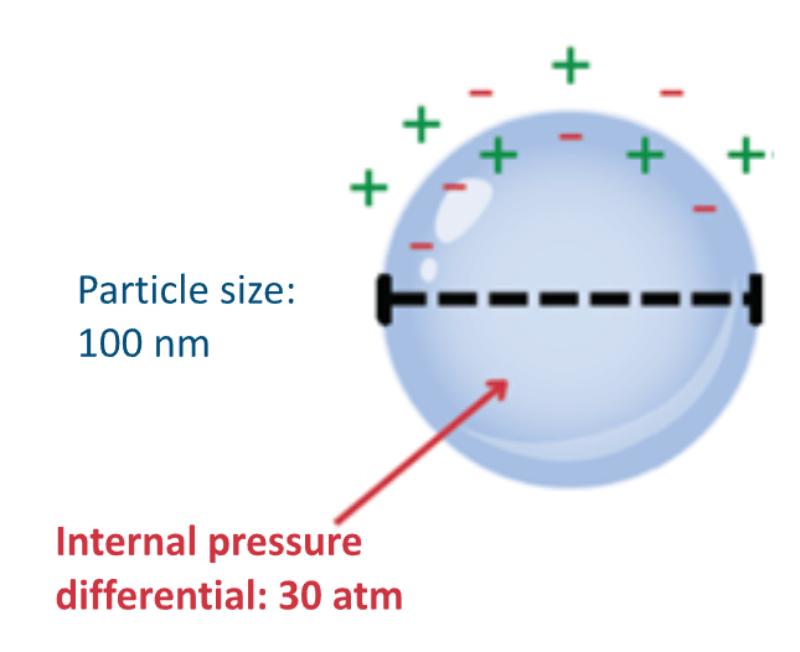
Based on molecular dynamics, an ordered electrostatic polar arrangement (+/−) forms at the gas–liquid interface within bubbles only a few nanometers in diameter.
This electrostatic effect promotes lipid breakdown and sterilization
According to the formula $\Delta p = 2\sigma / d$, at a diameter of d = 100 nm, the internal pressure differential of a bubble in water can reach approximately 30 atm (standard atmosphere). If surface tension is present in the water, the internal pressure of the bubble will also increase accordingly.
Effects :
- When bubbles collapse, they generate pressure waves capable of physical stripping.
- The high surface-area-to-volume ratio of the bubbles allows them to adhere readily to surfaces, enabling effective removal of attached contaminants and enhancing overall cleaning performance.

1. A Two-Pronged Approach to Address the Right Problem
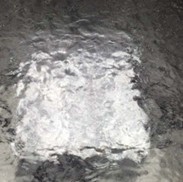
Ultrasonic waves generate micro-explosions through cavitation, making them highly effective against contaminants with particle sizes below 1 μm. Upon collapse, microbubbles produce microstreaming and shear forces, pushing contaminants out of even the narrowest crevices in the material.
→ Working in combination, the two technologies can simultaneously address contaminants of different attachment states and sizes, with far greater efficiency than either technology alone.
2. Reducing Reliance on Chemical Agents for Eco-Friendly Cleaning
Both ultrasonic and microbubble technologies are physical cleaning methods. Used in combination, they can significantly reduce the need for acids, alkalis, solvents, and other chemicals. Under certain conditions, cleaning with DI water alone is possible.
→ Supporting energy savings, carbon reduction, waste minimization, and ESG compliance.
3. Enhanced Cleaning Performance for Complex and Intricate Structures
Ultrasonic waves can penetrate liquids to reach blind spots and micropores.
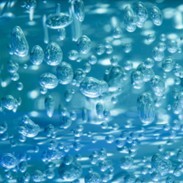
Microbubbles can adhere to material surfaces or the inner walls of pores and generate localized cleaning forces upon collapse.
→ Particularly well-suited for hard-to-clean components such as narrow channels and tight crevices.
4. Minimizing Surface Damage and Improving Material Compatibility
Ultrasonic waves first efficiently strip away the bulk of contaminants, and in the subsequent stage, microbubble water is introduced for gentle, refined cleaning.
Thanks to their adhesion and detachment properties, microbubbles can further remove residual particles and interfacial contamination without causing additional mechanical impact.
→ This "strong → gentle" two-stage cleaning strategy is particularly suited for surface-sensitive materials such as photomasks, ceramics, and semiconductor components, achieving high cleanliness standards while protecting the integrity of the material.
5 Improving Final Cleanliness and Yield
Ultrasonic waves effectively break down residual surface tension, enhancing the performance of the final DI water rinse and drying stages. Microbubbles can carry particles to the surface, reducing the likelihood of re-attachment.
→ The result is: Fewer residual particles, improved process yield, and reduced risk in downstream processes